
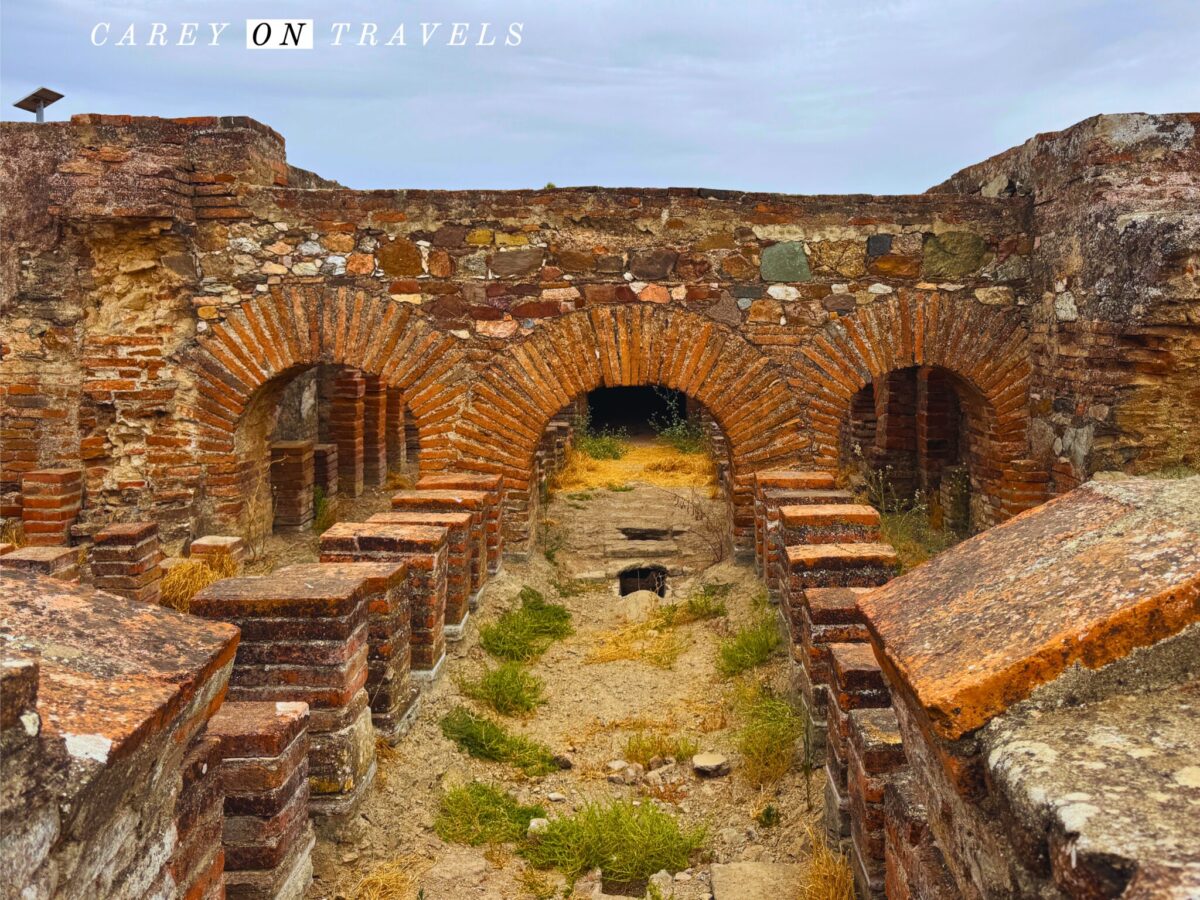
Well beyond the typical tourist track, in the plains of the Alentejo, lies the Villa Romana de Pisões, one of Portugal’s most remarkable archaeological finds. Many people visit the Roman Temple of Diana in Évora, but few venture 1 hour further to Beja, one of the top cities in the Alentejo. Just outside of Beja, the Villa Romana de Pisões was “recently” discovered in 1967, yet already provides a glimpse into the luxurious rural life of Romans in Lusitania. We found the site to be quite unique, from its low-key and uncrowded vibe to its unpolished look and its agricultural location. Here is our guide to exploring Villa Romana de Pisões, with its extensive mosaics, private baths, residence, and advanced water system from the 1st-4th centuries AD.
This post may contain affiliate links. If you make a purchase through these links, we will earn a small commission at no additional cost to you. We recommend products we have personally used or verified. Read the full disclosure here.
Don’t have time to read the whole article?
Find the top Beja hotels!
Reserve your rental car!
If you don’t have time to read this now, please pin it for later!
A Brief History of the Villa Romana de Pisões
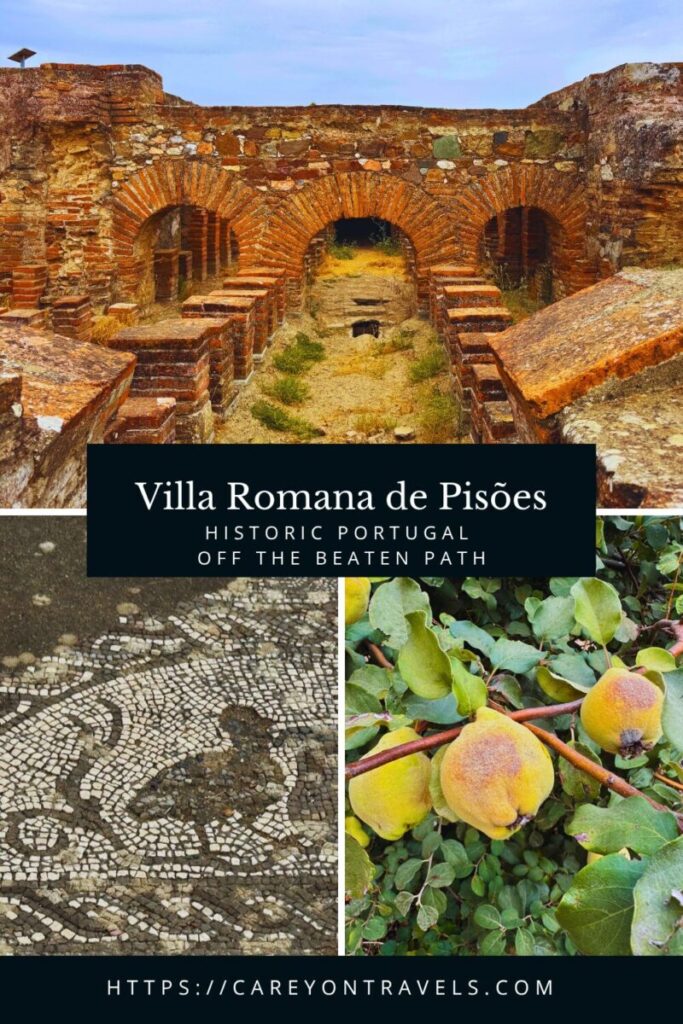
Villa Romana de Pisões was built in the 1st century AD, just outside the city of Pax Julia (modern day Beja). Pax Julia was part of the Roman province of Lusitania, which included most of modern day Portugal and portions of Spain. This villa rustica combined agricultural production with a lavish residence for its wealthy owners, the Gaio Atílio Gordo clan. The countryside estate supplied agricultural products to the city of Pax Julia at least until the 4th century.
In 1967, the site was discovered by accident during farm work. It is considered to be one of Portugal’s most significant archaeological finds. The restoration and research at the site is managed by the University of Évora, who continues to uncover more information about daily life at the villa.
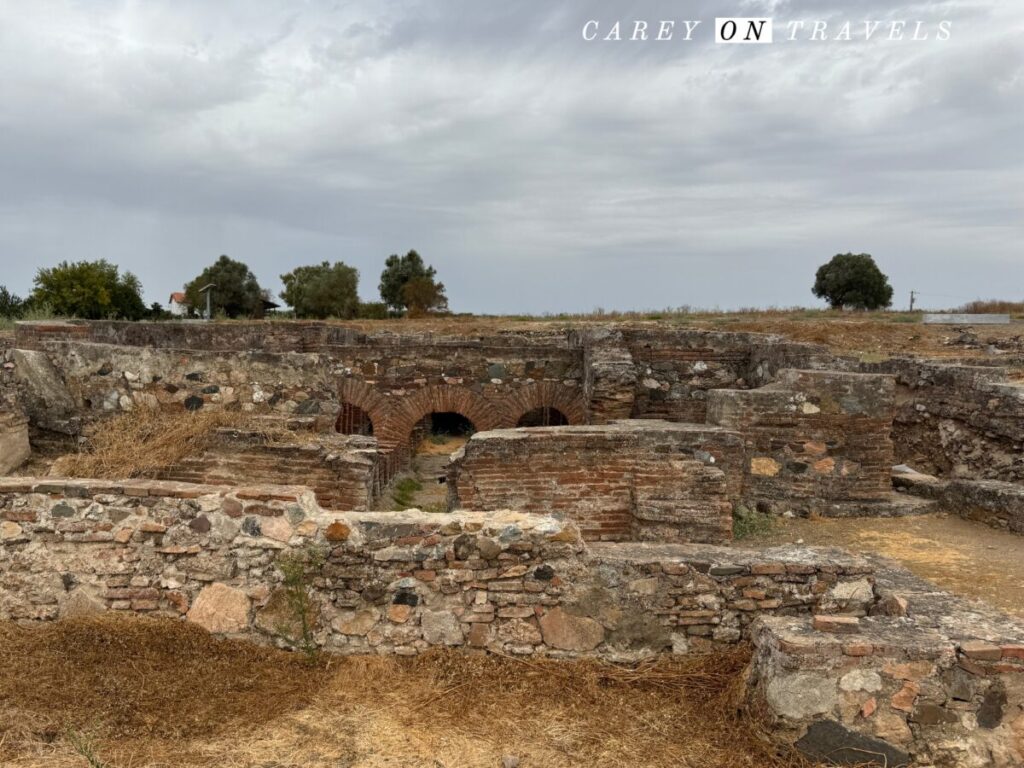
Archaeologists uncovered a peristyle courtyard surrounded by more than forty rooms. This is a typical arrangement for Roman villas designed for comfort and luxury. They’ve restored beautifully preserved mosaic floors and marble wall panels. An elaborate bath complex with a hypocaust heating system is a testament to the advanced engineering of this period. The Romans’ mastery of water management is displayed via the large outdoor swimming pool and dam. For those interested in Roman water management systems, be sure to check out the nearly 3 km long Roman aqueduct in Conimbriga, one of the top Roman ruins in Europe to visit.
How to Get to the Villa Romana de Pisões
The Villa Romana de Pisões is located about 10 kilometers southwest of Beja. The easiest way to reach the site is by car or bicycle. From Beja, take the EN-18 road toward Aljustrel and follow the signs near the village of Penedo Gordo. The final stretch is along a bumpy, rural dirt road. Our small, 2-wheel drive rental car had no problem on these roads. Be sure to drive carefully though–there are a number of intersecting farm roads. There is a small, dirt pull-out just across from the site entrance where visitors can park. We didn’t see any parking sign there, though there is a small sign next to the site itself. We use and recommend DiscoverCars.com for booking our rental cars in Portugal.
Pro Tip: Mobile phone service was very spotty at the site during our visit. Download the necessary maps onto your phone or GPS before you go to ensure that you can navigate back from the site.
Tips for Visiting Villa Romana de Pisões
- The villa is generally open 9 a.m. to 12.30 p.m. and 2 p.m. to 5 p.m. Tuesdays to Sundays. Entry tickets in 2025 are 3 Euros per person (discounts may apply). Check website for latest times and fees before you visit.
- The signage at the site itself is quite minimal. Be sure to watch the short movie about the history of the site at the interpretive center, and pick up a brochure with a map of the site and historical information (available in a number of languages).
- Because of its countryside setting, it’s best to visit in the morning or late afternoon to avoid the Alentejo’s intense midday heat, especially in summer.
- Be sure to wear comfortable shoes to navigate the paths.
- Take care to avoid walking on the mosaics on the ground. There were a few that were not as obvious. It would be easy to step on them if not paying attention.
- There is no shade around the ruins. Be sure to bring along sunscreen, a hat, and water.
Pro Tip: If you visit on a hot day, consider adding a stop afterwards at the Parque Fluvial Cinqo Reis for a refreshing swim.
Top Things to See at the Villa Romana de Pisões
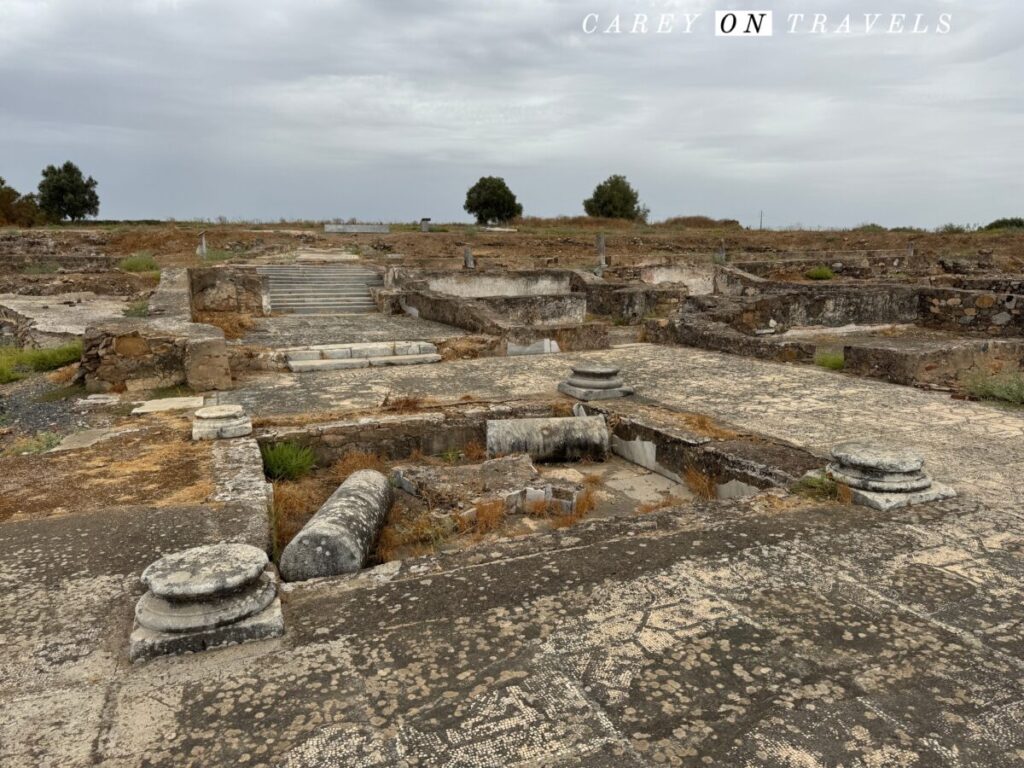
A visit to Villa Romana de Pisões provides a deep dive into the area’s Roman past. It’s worth spending a few hours wandering this extensive site, learning more about the history and culture. Don’t miss seeing these highlights:
- Residential Quarters & Courtyard – The elegant peristyle with its surrounding rooms showcases how Roman families organized daily life and business.
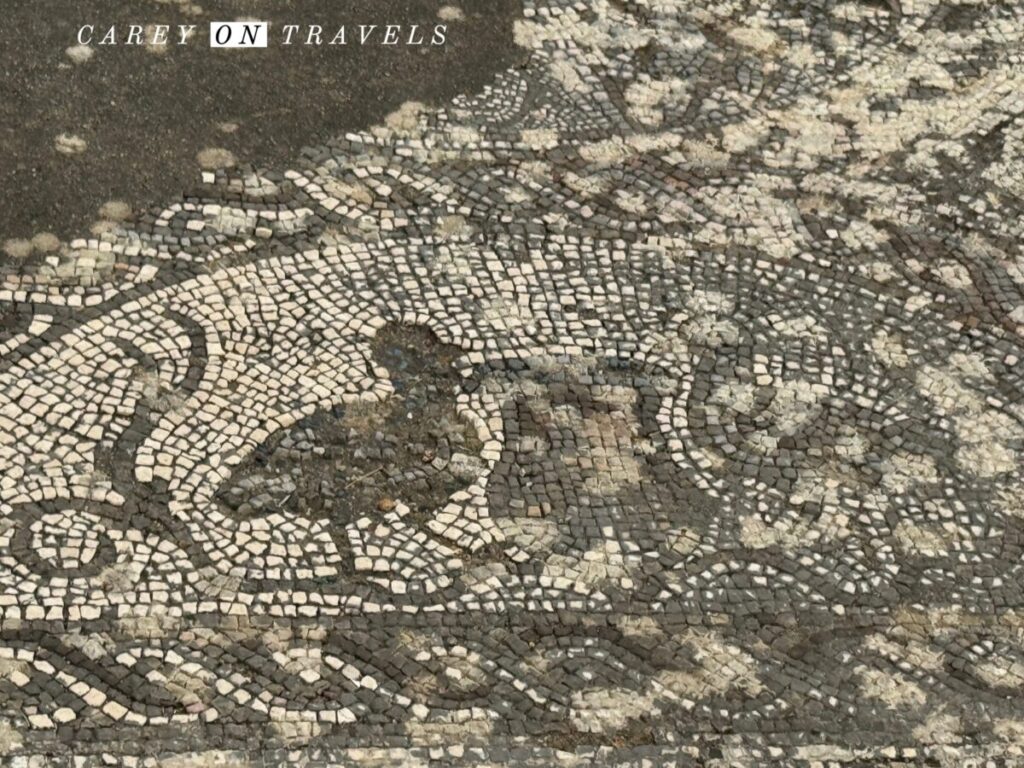
- Mosaic Floors – Delicate geometric and animal designs decorate the floors, reflecting the wealth and artistic taste of the villa’s owners.
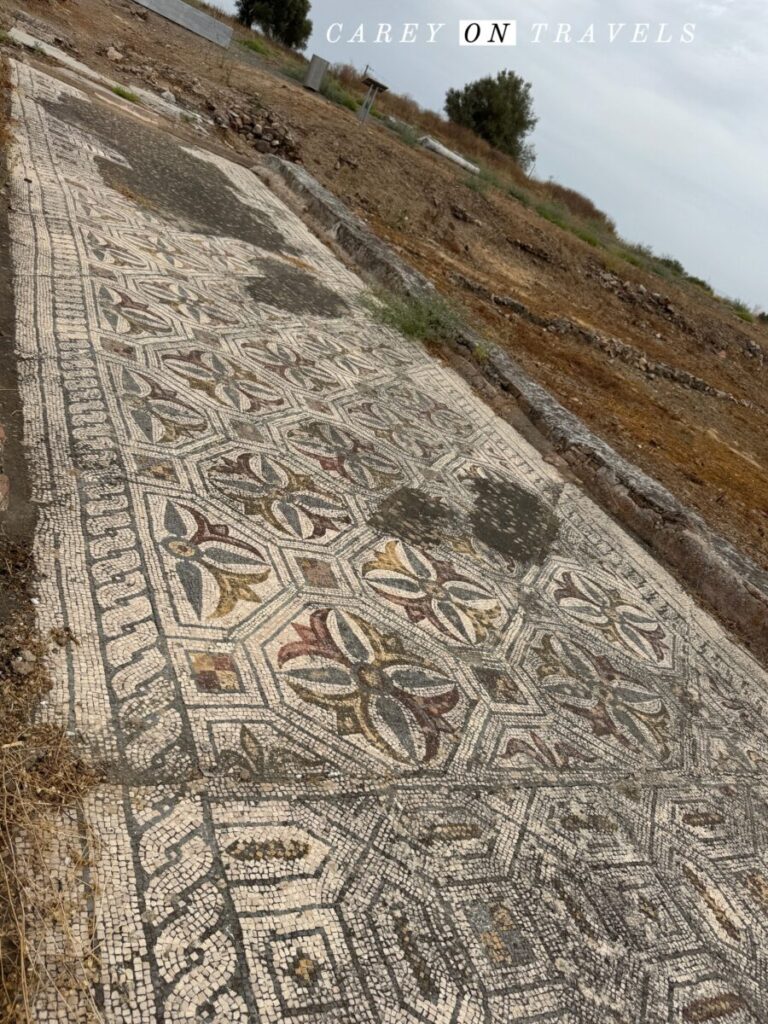
Tip: Visitors can wander in and around the ruins, but must be very careful not to step on and damage the mosaics.
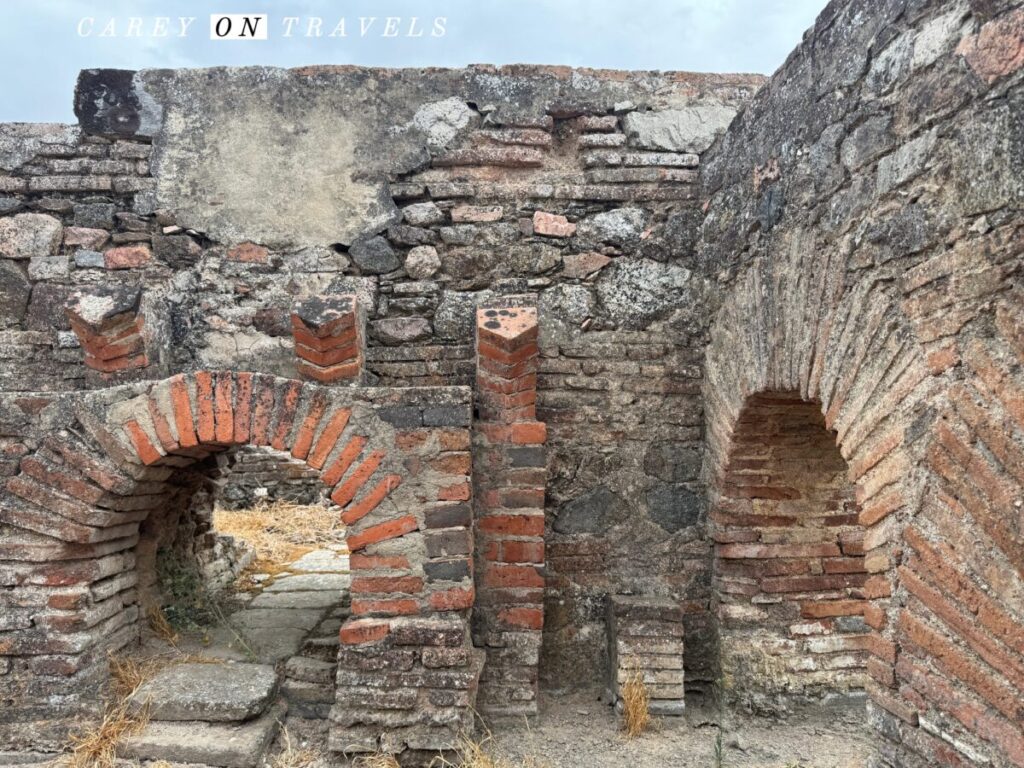
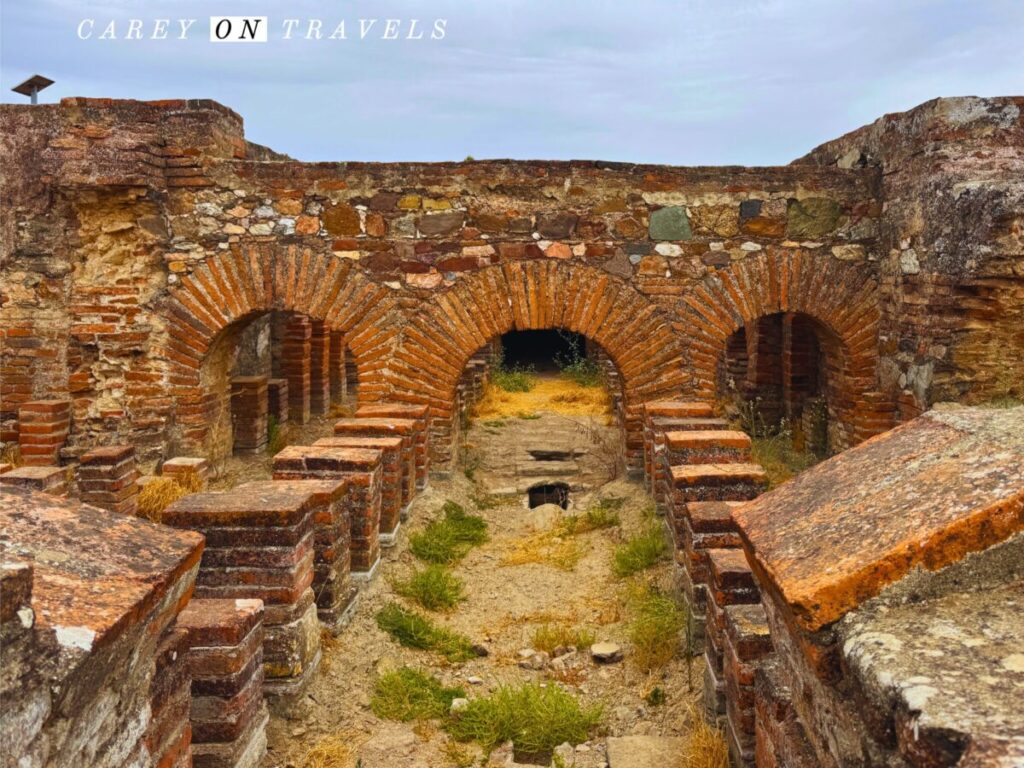
- Thermal Baths – The well-preserved bath complex, complete with heating chambers and water channels, demonstrates how Romans brought urban luxuries to their rural retreats.
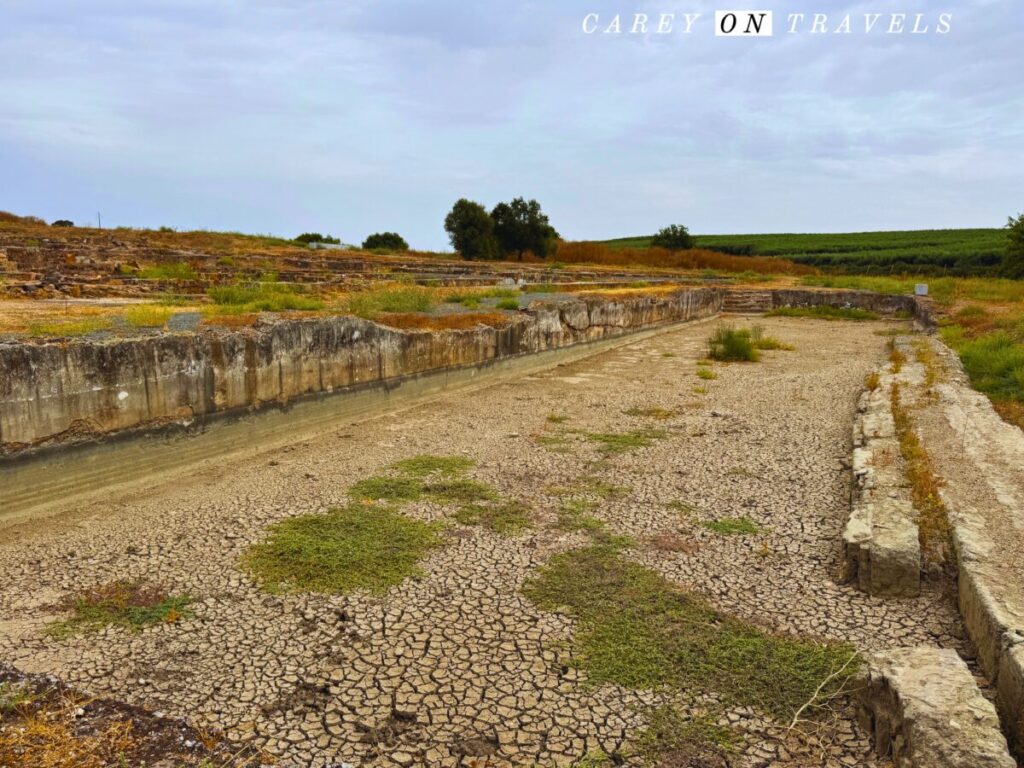
- Outdoor Pool – The large natatio, or swimming pool, once formed part of the villa’s leisure area. It still highlights the grandeur of the estate.
- Reservoir and Waterworks – A dam and aqueduct system supplied water for the baths, fountains, and agriculture.
Other Roman Sites and Museums Near Beja
After visiting the Villa Romana de Pisões, head into Beja to learn more about the ancient history of Beja (formerly Pax Julia).
- The Nucleo Museologico in Beja allows visitors to walk over the remains of a Roman villa, peering through glass panels, and viewing artifacts.
- Currently under reconstruction (and temporarily closed): The Museu Regional Rainha D. Leonor, formerly known as the Museu Regional de Beja, is housed in the Convento de Nossa Senhora da Conceição. Explore artifacts from Beja’s Roman period, including sculptures, coins, and everyday objects.
If you’re inspired to explore Portugal’s Roman ruins beyond Beja, consider:
| São Cucufate | 30 minute drive | Roman villa near Vidigueira |
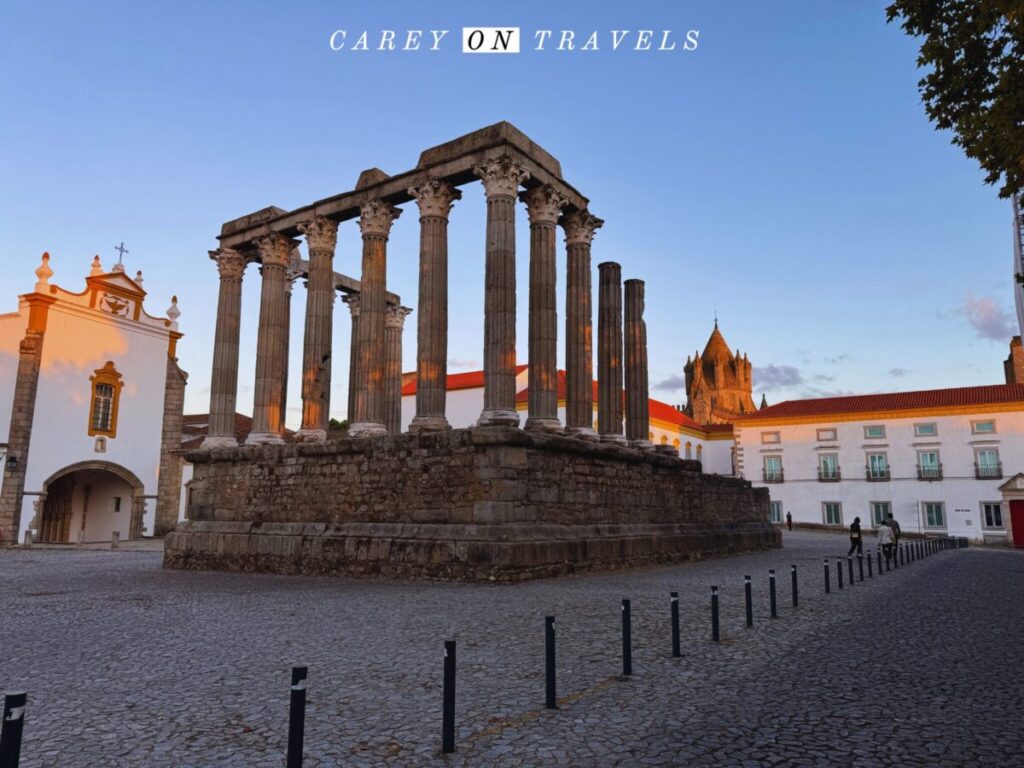
| Évora | 1 hour drive | Temple of Diana |
| Estoi | 1.5 hour drive | Milreu Roman Ruins |
| Merida | 2 hour drive | Worth the extra drive, Merida (Spain) is filled with Roman ruins. |
Where to Stay Near the Villa Romana de Pisões
Base yourself in Beja for easy access to the ruins and other cultural sites. Some excellent options include:
- Pousada Convento de Beja – Ideal for history lovers, this stunning 13th-century convent has been converted into a boutique hotel. It combines historic charm with modern comfort, a swimming pool, and lush gardens.
- Hotel Bejense – Located right in the historic center, this is a good option for travelers looking for location, convenience and value.
- Vila Gale Nep Kids – For those visiting with kids, consider a stay at the full service Vila Gale, complete with family rooms, fitness and sauna, pools, waterpark, restaurant, and more.
For an immersive experience, stay two nights so you can enjoy both the Villa Romana de Pisões and Beja’s atmospheric old town at a relaxed pace.
Staying in Évora is another great option, with its many historic sites and unique places to stay. Beja is an easy day trip from there.

Final Thoughts on Visiting Villa Romana de Pisões
While we've visited and enjoyed numerous other Roman sites in Portugal, such as Conimbriga, Évora, and Milreu, there is something special about visiting the Villa Romana de Pisões. The site was only relatively recently discovered, and as such, feels much less polished than some of its better known counterparts. The blend of the quiet Alentejo agricultural landscape with the Roman sophistication found at Pisões results in one of Portugal’s most fascinating archaeological sites. Head off the beaten path and enjoy a memorable glimpse into how Romans in Lusitania lived, worked, and relaxed in their rural estates!
You Might Also Enjoy:
- The Best Cities in Portugal, Which One Should You Visit?
- Top Roman Ruins in Europe to Visit
- Best Destinations in Portugal in Winter
- Discovering Mérida, Spain, Roman Ruins and Timeless History
- Conimbriga Roman Ruins
- Coimbra What to See, A 4-Day Itinerary
- Knights Templar Portugal, Tomar Day Trip
- Best Cities in the Alentejo to Visit
- Top Tips for Renting a Car in Portugal
- 10 Activities in Lisbon Off-the-Beaten Path
- Top 10 Activities in Sintra Off-the-Beaten Path
- Top Things to Do in Ponte da Lima, Portugal’s Oldest Village
- What to See in Évora, Portugal, a Traveler’s Guide
If you enjoyed this post, pin it for later!
Travel Resources
We recommend booking through our preferred travel booking sites below.
| Air Travel | SkyScanner |
| Lodging | Booking.com, VRBO.com, Expedia.com, Hostelworld |
| Tours and Activities | Viator.com, GetYourGuide.com, TakeWalks.com, Tinggly.com |
| Car rentals | Discovercars.com |
| Travel insurance | Squaremouth |
| Bike and scooter rentals | BikeBookings.com |
| Train tickets | RailEurope |
| Bus tickets | Busbud |

careyontravels
"Carey" On Travels: Exploring the world, one journey at a time. Expert guidance, taking you off the beaten path and avoiding the crowds.
View stories
This looks like such a fascinating place to visit!
Thank you for the feedback!
This is a beautifully written guide Carey! I’ll be saving it for when I’m in Portugal in the near future.
Thank you, hope you have a chance to visit!
So cool to see the Roman ruins! Hoping I can make it there some day and to other spots around Portugal.
Wow. What an amazing find! I love visiting places like this to see how people lived. I hope many more are uncovered.
It is well off the path most tourists take, but in an area so rich in history and culture.
Very interesting article! It’s a place I know nothing about and the read helped me to have a better idea of what to do and see in the area
Thank you for the feedback!
Great information. I love Roman Ruins and this area has tons of them, so I need to pay it a visit. I have only been to Lisbon and the Azores for Portugal, so I need to go back and explore the country more.
It’s such a diverse country, we always enjoy finding new places to visit.
Very cool site!
I am sorry we missed the Villa Romana de Pisoes when we stayed in Beja. We just ran out to time with so many interesting things in the area. Fascinating to get this view into Roman life. Alway amazed at how much is still in good shape for ruins like this – especially the coloured tiles!
It is amazing, as you mention, how good of shape these ruins are in after so much time. The mosaics are wonderful!
I’m planning a Portugal trip for next spring, so this is perfect, thank you!
Great, hope you have a chance to visit this area!
Wow! It’s hard to believe that this historic site was only discovered recently, and the mosaic floors and remaining structure are truly magnificent. Thanks for teaching me something I didn’t know about, Sonia.
Glad to share a place that few Portuguese visitors seem to know about.
Great post! The ruins at Villa Romana de Pisoés look fascinating, and I love how you’ve brought the history to life. Thanks for putting this hidden gem on my travel radar!
Thank you for the feedback!
Loved the post. Ruins like these always make me wonder about the life that existed beyond our imagination. And, here we are, thinking of ourselves as the most sophisticate of the lot..
It is amazing how advanced they were in terms of engineering so many years ago.
Villa Romana de Pisoes looks like a true hidden gem you discovered in Portugal. In spite of the inconveniences of reaching this place through rough farmland, it is totally worth it. Romans are famous to be experts in water management through Aqueducts and dams, and this place with swimming pool and heated water systems in ancient times makes it more amazing to believe that. This would be the perfect place to visit for architecture and history lovers as well as photographers.
Thank you for the feedback. Yes, the large outdoor swimming pool and heated water systems are incredible given their age.
This is so cool! Hard to believe it was only recently discovered. I’m going to add it to my list for when we are there next year!
Great, hope you enjoy it!
Villa Romana looks like a fascinating place to see in Portugal!
Thank you for the feedback!
Great photos! Appreciated the brief history behind the site!
Thank you for the feedback!
This is so amazing, and that it was only discovered so recently? It really makes you realize how much is out there still that is still unknown! It’s crazy!
It is amazing that it was discovered so recently in the midst of farm land.