

Winter hiking can be such a magical experience. Enjoy quiet forests, snow covered trails, and the cool and crisp mountain air. The freezing temperatures and sometimes icy terrain bring challenges too. Being prepared with essential winter hiking gear is the key to enjoying the trails safely. Stay warm, safe, and comfortable on the trail this winter with the essential winter hiking gear checklist and tips for hiking in snowy conditions.
This post may contain affiliate links. If you make a purchase through these links, we will earn a small commission at no additional cost to you. We recommend products we have personally used or verified. Read the full disclosure here.
If you don’t have time to read this now, pin it for later!
Essential Winter Hiking Gear for Humans
1. Clothing Layers
Be sure to start with a solid foundation of 3 layers, which can be used to adapt to changing temperatures along the trail.
- Base Layer: This innermost layer (top and bottom) should be moisture-wicking, such as merino wool or synthetic. This helps to keep the sweat off your skin. Be sure to avoid cotton.
- Mid Layer: An insulating jacket, such fleece or down jacket, is your best bet.
- Outer Layer: Use a waterproof and windproof shell (jacket and pants) to protect you from snow, sleet, and wind.
- Extras: Wool socks, insulated gloves/mittens (optional liner gloves), a neck gaiter, and a warm beanie.
Pro Tip: We recommend bringing along a change of base layer top. This is especially important for hikes where you may sweat a lot on the uphill, such as the hike to Hanging Lake. You can then change tops before hiking downhill.



2. Footwear
Wearing the appropriate footwear can make or break your hiking experience. We’ve watched hikers try to navigate snowy and icy trails in Crocs and tennis shoes, which have little to no tread. They tend to be miserable, especially on the downhills.
- Insulated Hiking Boots: Waterproof boots with good ankle support are the most effective option. On easier trails where there is just a dusting of snow, trail running shoes may be a good alternative.
- Traction Devices: Micro-spikes are most commonly used to handle icy conditions. Keep in mind that these do come in different sizes (aligning with shoe size), and come with different sized spikes.
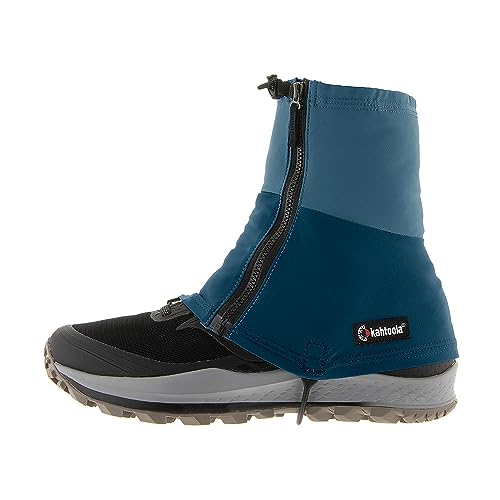
- Gaiters: To keep snow out of your boots. These are not required when there is just a small amount of snow. When the snow is deeper, gaiters are a great way to keep the snow from getting in your shoes.
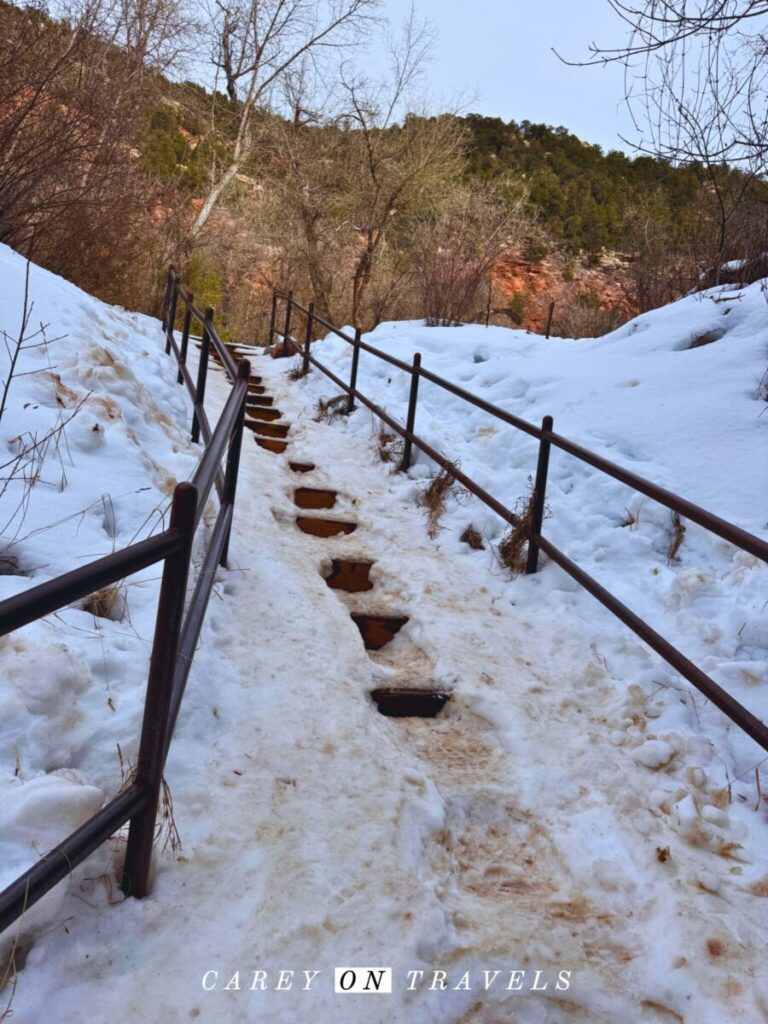
Pro Tip: Read Alltrails or similar reviews before hitting the trail to get the latest snow conditions. While micro-spikes are effective for many winter hiking trails, they will not be the best fit for deeper or softer snow. In this case, consider bringing snowshoes.


3. Safety and Navigation
- Map & Compass or GPS: Batteries on electronics can drain very quickly in the cold weather. Be sure to carry backups for your electronic essentials.
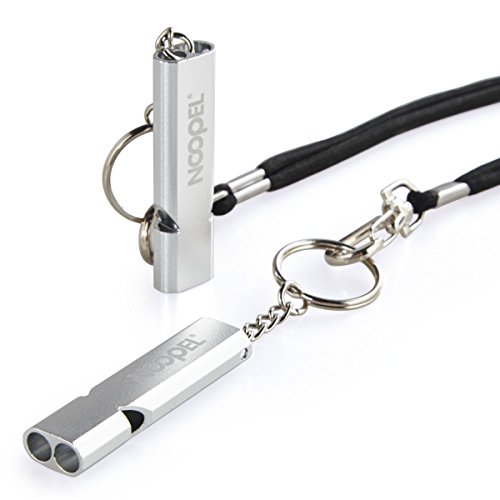
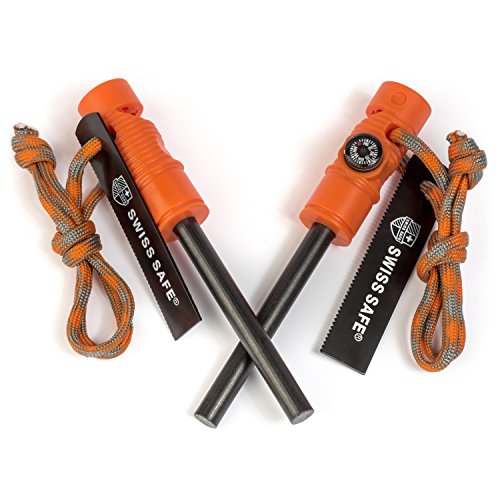
- Emergency Gear: Whistle, emergency blanket, a small first-aid kit, and a fire-starter (matches or lighter).
- Trekking Poles: Trekking poles with snow baskets help with balance on snow and ice, and can make the experience much more comfortable.
- Headlamp: Always pack a headlamp with extra batteries, even if you plan to be back before dark.
Avalanche Safety: always bring a snow shovel, snow probe, and an avalanche transceiver on any winter hike that touches avalanche terrain. We highly recommend taking avalanche safety training before venturing on hikes in avalanche prone areas.


4. Hydration & Nutrition
- Insulated Water Bottle or Thermos: Prevents water from freezing. You may also want to bring along hot soup or a hot drink in the Thermos.
- Bring some electrolytes to mix into your water (we typically use Nuun and LiquidIV).
- High-Energy Snacks and Lunch: Think snacks that don’t freeze solid, such as nuts, fruit, trail mix, jerky, and energy bars. If planning a longer day hike, bring a nutritious meal that won’t spoil in the heat or cold.
Pro Tip: be sure to start your winter hike properly hydrated, and bring along 3-4 liters of water per person for a half day hike.


5. Extra Essentials
- Backpack with Rain Cover: You’ll need a day pack to carry your supplies. We typically carry a 25 liter pack, though this is based on personal preference. Don’t forget a rain cover in case of rain or wet snow.
- Hand & Toe Warmers: These can be a lifesavers on freezing days, and don’t take up too much space in your bag.
- Sunglasses & Sunscreen: Keep in mind that, with the reflection off the snow, you are likely to burn more quickly. If you’re hiking at altitude, such as in Colorado, you’re closer to the sun and will burn even more quickly.
- Personal medications: don’t forget to bring any personal medicines needed for the day, including an EPI-Pen for those with severe allergies. We try to bring enough for 1 day (in case something were to go wrong).



Essential Winter Hiking Gear for Your Dog
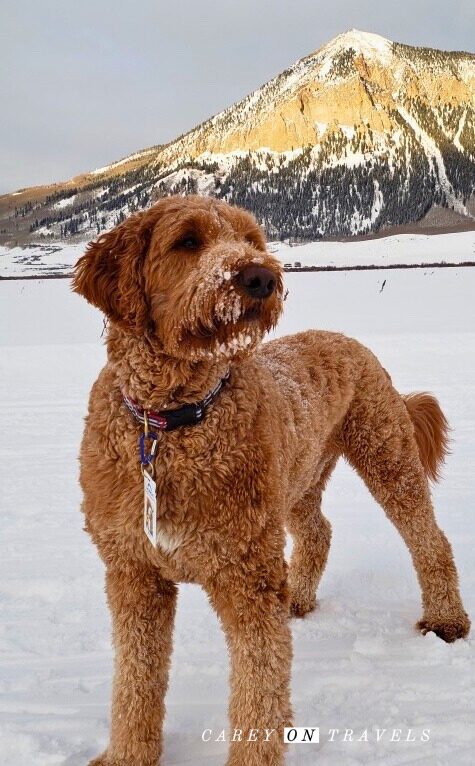
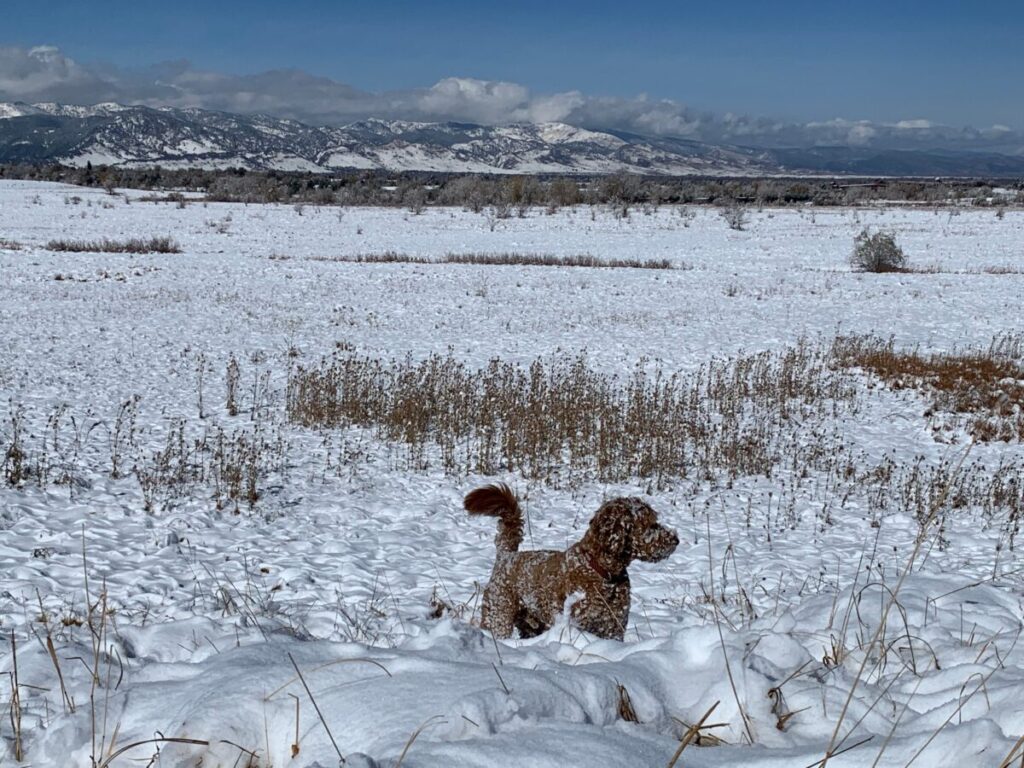
If your pup is joining you on the trail, they’ll need gear, too! Dogs can get cold, dehydrated, and even suffer frostbite in snowy conditions without the right protection.
Dog Winter Gear Checklist
- Insulated Dog Jacket: This can keep your pup warm, especially for short-haired breeds.
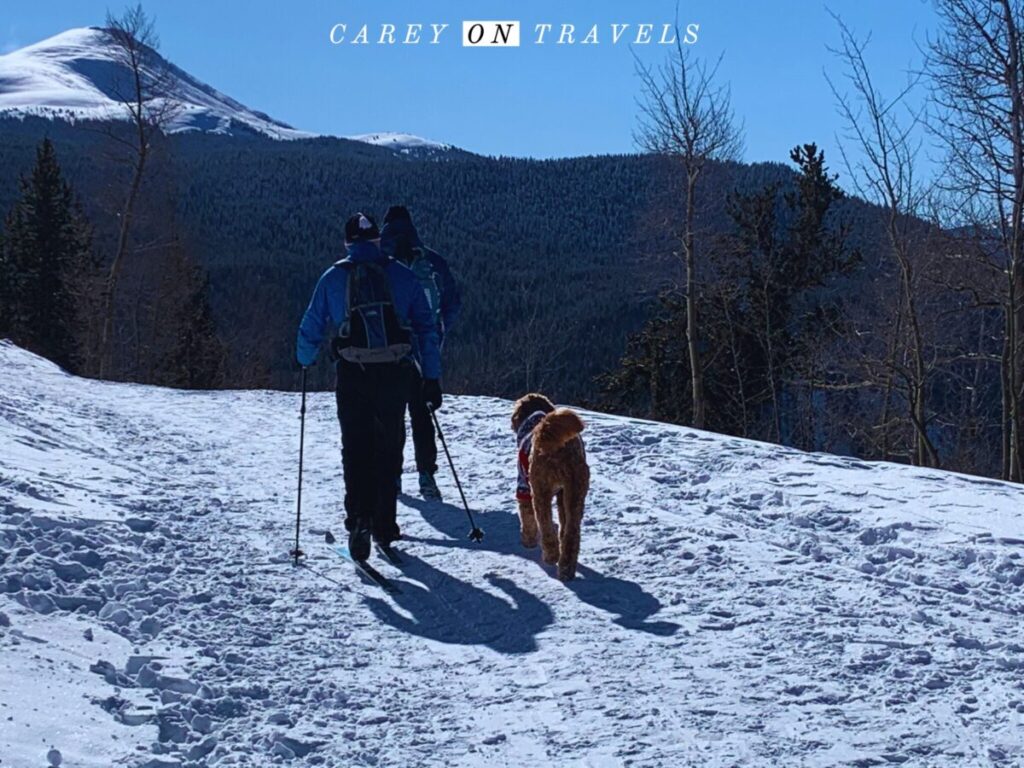
- Booties: These protect their paws from ice, salt, and snowball buildup. Our dog struggles with snowballs building up on his paws. He's constantly loosing booties along the trail, so have also tried using Musher's Secret salve instead of booties with some success.
- Collapsible Water Bowl & Insulated Water Bottle: Hydration is just as important for pups, so be sure to bring along plenty of water.
- Trail Snacks or Kibble: Just like you need snacks on the trail, dogs also need to keep their energy up on the trail.
- Reflective Harness & Leash: For visibility in low light.
- Towel or Blanket: For drying off or warming up after the hike.


Tips for Winter Hiking
The first step is having the essential winter hiking gear (and packing it for your hike). Equally important though is how you plan your winter hike. Here are some simple tips to help you enjoy your winter hiking:
- Check the Weather Forecast: check not just the temperature, but also the snow or rain forecasts and wind before you hit the trail.
- Check Trail Conditions: Use Alltrails or similar sites to read recent reviews on trail conditions. Look up avalanche risk and trail closures on relevant local sites before heading out.
- Start Early: Plan to finish your hike well before dark, keeping in mind that winter days are short. Be sure to leave extra time before dusk in case of any delays.
- Adjust Your Pace Expectations: Plan for extra time when hiking in snow and ice.
- Stay Dry and Warm: Sweat can cool you down very quickly. Take time to adjust your clothing layers to keep from overheating and minimize sweating. Try not to over bundle at the start of your hike (causing you to sweat).
- Learn the signs of Hypothermia & Frostbite: A few of the warning signs to watch for are shivering, slurred speech, confusion, and numbness. We suggest to read more about the symptoms and treatments for these conditions.
- Keep Electronics Warm: The freezing temperatures drain batteries. Store your phone or other electronic devices close to your body (this includes medical devices such as diabetes pumps).
- Hike with a Buddy: Let someone know your route and return time if you decided to hike solo.
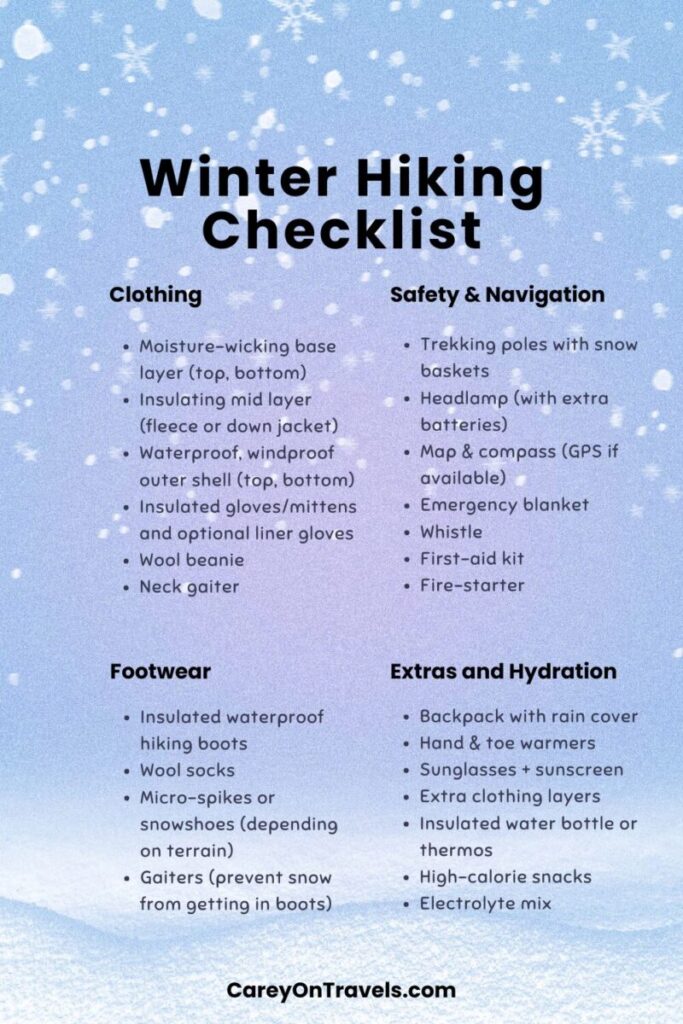
Winter Hiking Gear Checklist
To make your packing easier, here’s a checklist you can pin or print and take with you:
Essential Winter Hiking Gear Final Thoughts
Winter hiking is one of the most incredible ways to experience the outdoors. Being prepared is key. By packing the essential winter hiking gear, you’ll be ready to tackle snowy trails with confidence. Enjoy your winter hikes and stay safe!
Do you have other essential winter hiking gear you always pack for your hikes? Please let us know in the comments below.
If you enjoyed this post, pin it for later!
Travel Resources
We recommend booking through our preferred travel booking sites below.
| Air Travel | SkyScanner |
| Lodging | Booking.com, VRBO.com, Expedia.com, Hostelworld |
| Tours and Activities | Viator.com, GetYourGuide.com, TakeWalks.com, Tinggly.com |
| Car rentals | Discovercars.com |
| Travel insurance | Squaremouth |
| Bike and scooter rentals | BikeBookings.com |
| Train tickets | RailEurope |
| Bus tickets | Busbud |



Great list! Saving this. I love that you remembered to pack for your cute puppy.
Thanks!
I forgot to mention in my comment that I appreciate you including info on dog’s needs for hiking! cute pics too 🙂
Thanks for the feedback!
These are great tips!! I really need to get me some hiking boots. Thanks for this!! Saving it for my next big hike.
Hiking boots can be a game changer, making for an enjoyable hike.
There’s no such thing as bad weather, just bad clothing. Great guide as I prepare for this coming winter.
Great point, most weather is manageable as long as you’re dressed appropriately.
It’s so important to be prepared while hiking- in winter especially! This is a great resource to make sure you have everything you need. I love that you included dog must-haves as well.
Thank you for your feedback!
The sun protection is SO important in the winter and something most people don’t think about in the winter.
Very true, especially with the reflection off the snow.
Having proper boots is an absolute must!! I accidentally took some friends on a snowy hike a few years ago (it wasn’t snowy at home but was on the summit) and I was the only one with proper hiking shoes. Needless to say, it was an adventure!
The right shoes/boots can certainly make or break the hike.
Wind is a very important factor in winter as it can drive temperatures dangerously low.
And one should avoid very low temperatures, also.
Both very good points.
That’s such a useful post and love that it includes winter hiking gear for dogs as well! I tried out spikes for the first time last winter and they truly are a gamechanger.
Glad the microspikes worked well for you.
This winter hiking packing list is great! I don’t usually hike in winter, but I would love to go on some hiking adventures this year.
Hope you have a chance to give winter hiking a try!
I’ve never camped in winter although sometimes summer in the U.K. is so cold it’s like winter! This is a great roundup of essentials for winter camping.
Thank you for the feedback. Our checklist is best used for hiking. Winter camping will require additional supplies.
This is so helpful. I have been trying to explore more of upstate NY and want to do some hikes in the fall/winter, and will use this to prepare!
Hope you enjoy your hikes!
I love how you included gear for dogs, I didn’t realise this gear existe. I have taken my dog on walks, sort of hikes, and never considered taking him in the snow. Now I feel more confident I could.
I’d try your dog on shorter walks on the snow first and see how he does.
If you have never hiked with spikes on your shoes/boots in the snow, they are game changers! I highly recommend them.
They are a true game changer!